 Lucky's Leafs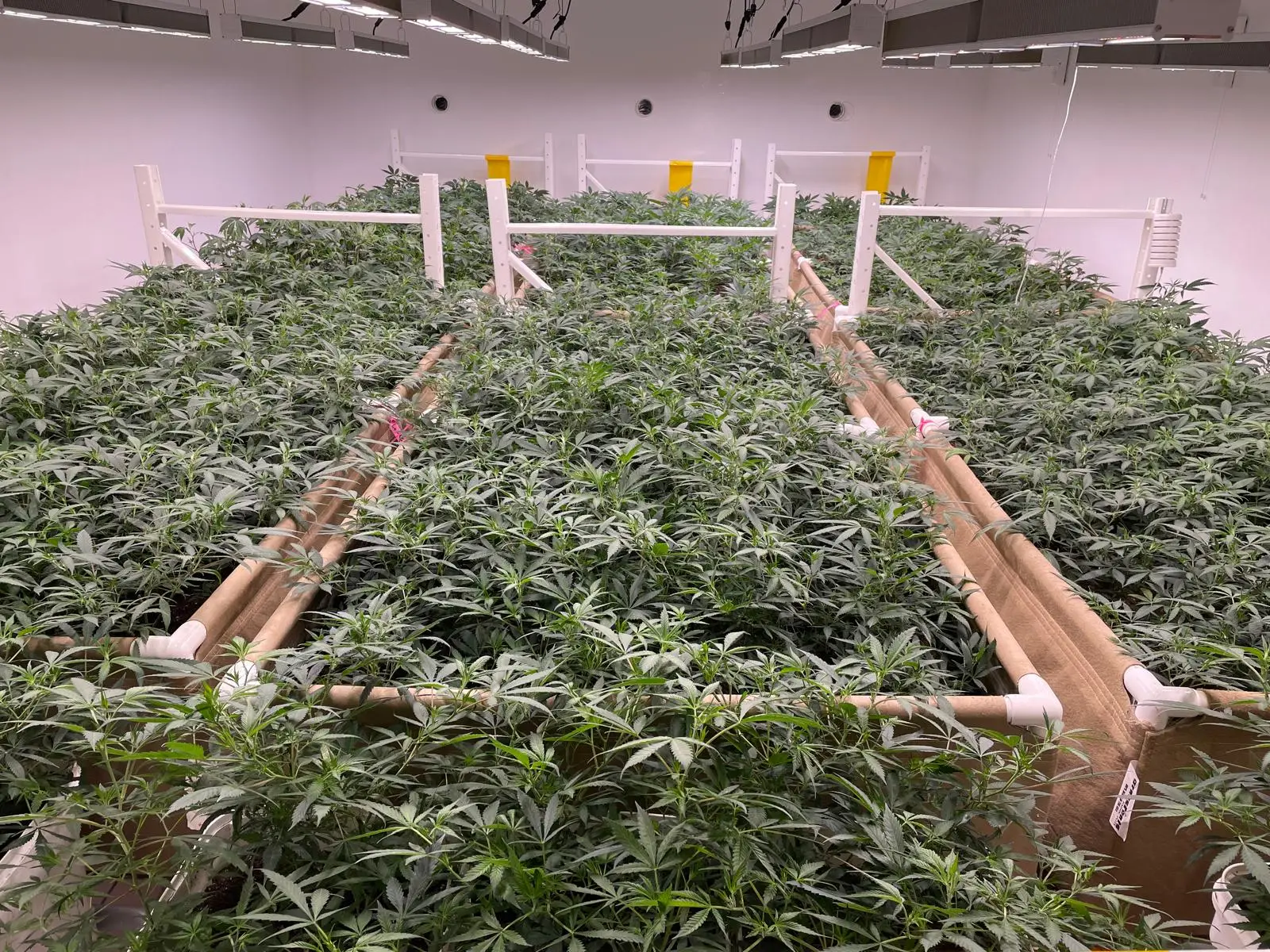
New Jersey's outdoor
cannabis advantage.
Lucky's Leafs is acquiring a rare, municipally-approved parcel where New Jersey lets us grow cannabis under the sun — and sell into a market that has paid more than double the national wholesale price. One outdoor harvest is built to cover the cost of the land.
Entitled outdoor cannabis land in a sealed market — one harvest built to pay for it.
Buying ~17 entitled acres at 2100 Belvidere Rd, Harmony Twp NJ — one of the only towns in the state that permits outdoor cannabis cultivation — and planting a 3.5-acre outdoor field — one Tier VI license at the state's 150,000 sq ft maximum — every season.
7,000 lb × ($900 − $200 grow − $40 excise) = $4.62M net crop margin from a single 3.5-acre cycle. Underwritten at the market's structural floor — ~38% of NJ's last print of $2,391/lb.
- Site control — LOI countersigned by seller (Aug 10 2026)
- Legal parcel — subdivision plat recorded, Warren County Map #877
- Outdoor use right — Harmony Ordinance O:24-06
- Municipal precedent — certified Resolution 24-24 on this lot
- Water — Allentown dolomite aquifer, hydro study filed
- Demand — signed Casa Verde dispensary LOI
Grow where the sun is free and the market is starved.
New Jersey is one of the country's most supply-starved cannabis markets. Wholesale flower printed $2,391/lb as recently as September 2025 — more than double the U.S. index — because too few cultivators were operational.
Only a sliver of that supply is grown outdoors. Outdoor cultivation costs a fraction of indoor, but nearly every NJ operator is locked into expensive warehouses because their town won't permit sun-grown canopy. We found a town that will — and a parcel already carrying municipal cannabis approval. We grow at outdoor economics and sell into indoor-scarcity pricing. The spread is the business — and the scarcity is official: as of October 2025 the CRC counted just three fully-outdoor farms in the entire state. With 100-acre outdoor applications now surfacing, the race for entitled dirt has begun.
The window is now — and it's measurable. Through H1 2026, NJ wholesale fell at record pace (−14.2% in March alone) as new growers switched on. As the scarcity premium fades, cost leadership becomes the durable edge — and sunlight is the cheapest input in agriculture.
We underwrite the base at $900/lb blended — the market's own structural floor, ~38% of NJ's last print — and every scenario carries NJ's $40/lb excise. The crop's cash break-even is ~$290/lb at the conservative $250/lb grow cost (~$240 at base): the margin of safety is structural.
2100 Belvidere Road — 17 acres built for three ways to grow.
A 27-acre farm parcel, subdivided (plat recorded May 1, 2026, Map #877) to deliver our 17.14-acre Lot 7.02 — open, vacant farmland with a Belvidere Road access strip and room for the full 150,000 sq ft canopy plus every setback and buffer.
The outdoor field is the business: New Jersey caps a cultivator at one license and 150,000 sq ft of mature canopy, and sunlight fills it at the lowest cost per pound in the state. The rest of the acreage carries the setbacks, buffers, security perimeter and drying — with room to shift canopy to greenhouse later, if the CRC approves it.
The reason this can't simply be copied down the road.
Outdoor cannabis is effectively banned across most of New Jersey — towns have to opt in, and almost none have: as of late 2025 the CRC counted just three fully-outdoor farms statewide. Harmony Township is the rare exception, and this specific parcel already carries the approvals.
Outdoor cultivation is expressly permitted
Harmony Ordinance O:24-06 (May 2024) authorizes cultivation "on the exterior portions of a lot." That single clause is what makes sun-grown economics legal here.
Municipal cannabis support on this parcel
Township Resolution 24-24 already granted municipal support for a Class 1 Cultivator + Class 2 Manufacturer license at this parcel — the local approval that gates the state license. This site has cleared that bar once already.
3.5 outdoor acres ≈ a full Tier VI license
NJ's top cultivator tier, Tier VI, allows up to 150,000 sq ft of mature canopy — the most any single cultivator license can hold, and NJ allows one cultivator license per owner group. Our 3.5-acre outdoor field (152,460 sq ft gross, planted to the cap) fills a Tier VI license at outdoor cost.
One of NJ's best aquifers, on-site
The state's own hydrogeology puts the parcel on the Allentown dolomite, where area wells yield 1,500+ gpm — ample for irrigation, pending a standard NJDEP agricultural water registration. Sun and groundwater replace indoor growing's two biggest costs.
Entitlements substantially in place
Minor subdivision is county-approved, the site sits in Flood Zone X, and utility service is confirmed by JCP&L — the slow, discretionary work is largely behind the asset.
Cultivation-pure, no retail entanglement
Harmony keeps dispensaries and distributors out — so we stay a focused cultivator selling into NJ's 300+ dispensaries, with no zoning conflict and less competition for the land.
One outdoor harvest. Built to pay for the land.
3.5 acres of licensed outdoor canopy, one grow cycle a year — in a sealed market where imports are federally barred and only three farms grow outdoors. We underwrite the base at $900/lb blended — the market's own structural floor, ~38% of NJ's last print. Move the assumptions yourself — every scenario carries the $40/lb state excise, and the crop's cash break-even (grow cost + excise) is just ~$240–290/lb.
In a market that cannot import, the floor is set by the marginal grower the state still needs. New Jersey's marginal supply is indoor, at roughly $500–700/lb cash cost; add the $40/lb excise and merchantable blended flower cannot structurally clear much below ~$850–950/lb — and the value tier where outdoor competes floors near ~$550–600. Gluts can push 20–30% below floor for a season before capacity exits. Read our ladder against that architecture: the base case prices the blended structural floor itself, the upside reaches only the external reviews' base-case view ($1,000–1,200), and conservative prices a glut beneath the value tier. Independent July-2026 underwriting reviews put the downside floor at $750–900/lb — bracketing our base and far above our conservative case. And the crop's cash break-even — grow cost plus excise — sits near $240–290/lb, roughly an eighth of the state's last print: the margin of safety is structural.
A billion-dollar market that can't grow enough of its own product.
Demand has outrun supply since adult-use launched in 2022. That imbalance is why NJ wholesale printed $2,391/lb in September 2025 while the nation now trades near $997 (June 2026).
Operational cultivators roughly doubled in late 2025 — from about 24 to 46 — and 2026 brought record price declines, with the NJ index hitting an all-time low by May. Hundreds more licenses will convert over the next 12–24 months. The advantage belongs to whoever can grow at the lowest cost when prices normalize. Outdoor sun-grown is the lowest-cost canopy there is — and in supply-short East-Coast markets it isn't discounted the way it is out West: in New York, where most licensed canopy is outdoor, sun-grown prints near indoor prices. New Jersey is also a sealed market: federal law bars interstate imports, so cheap Western outdoor can never undercut us here — every pound sold in NJ is grown in NJ, and today just three farms grow it under the sun.
Even as NJ prices compress toward the national average, an outdoor cost base near $200/lb preserves margin that indoor operators — at $650/lb and up to produce — simply cannot match.
The $900 base is a blend, not a bet on A-grade.
An outdoor harvest never sells as one product. At the reported ranges, a conservative mix — 40% A-grade at $1,800 · 25% B-buds at $1,000 · 35% biomass at $450 — blends to ≈$1,130/lb. Our base books $900/lb blended: it absorbs roughly 20% further compression across every grade plus the seasonal “Croptober” congestion dip (~8–10% as simultaneous outdoor harvests hit the market) before the model misses.
The mitigation is calendar, not hope: wholesale purchase agreements with dispensaries and manufacturers are negotiated before the crop hits the drying racks — anchored by the signed Casa Verde LOI and priced separately for flower and extract-input material.
A proprietary cultivation program the model doesn't lean on.
Our outdoor program runs on a proprietary cultivation methodology engineered for New Jersey's climate and growing season — designed to put us ahead of industry-standard outdoor yields. In NJ's conditions we expect 1.5–2.0 oz per square foot across the 3.5-acre field (152,460 sq ft) — roughly 14,300–19,000 pounds per season at full program performance.
None of it is in our numbers.
Every financial scenario in this deck is underwritten at or below 1 oz/sq ft: the base case assumes the plain industry average (2,000 lb/acre → 7,000 lb), and even the upside stops at 1 oz/sq ft. The proprietary program is modeled at zero — deliberately.
If the program performs to target, the surplus lands on top of a model that already covers the land at industry-average yield — every pound above 9,527 is torque the deck never asked you to believe. Targets are company engineering estimates for the proprietary methodology, not results from completed New Jersey harvests; program specifics are available in diligence.
One license, one field — the state's maximum canopy at outdoor cost.
New Jersey allows one cultivator license per owner group and caps it at 150,000 sq ft of mature canopy. Our 3.5-acre field fills that cap in season one, under the sun — the lowest cost per pound in the state. One raise turns it on; every season after that funds itself.
Acquire & license
Close the land, convert municipal support into the NJ Class 1 Cultivator license at Tier VI, develop the site — security, well, irrigation, field prep.
Plant & harvest 3.5 ac
Plant in spring, harvest in fall. One outdoor cycle returns ~$4.6M over crop cost and excise at base case — nearly twice the land price.
Replant the full canopy
The same 150,000 sq ft each spring, funded by the harvest before it — no new capital, no added canopy. Base-case net income of ~$2.8M every year.
More value per square foot
Higher yield per square foot from the cultivation program, and — only with CRC approval, inside the same 150,000 sq ft cap — shifting part of the canopy to greenhouse for shoulder-season cycles. None of it is in the model.
Conservative all the way down
The five-year model holds outdoor at $900/lb blended — at or below its structural floor and below NJ's 2025 prints — and charges every pound the $40/lb state excise plus Harmony's 2% local tax. It assumes compression continues to the floor and stays there, and it never grows the canopy past the single 150,000 sq ft license.
Every year repeats the same outdoor season under one Tier VI license and holds prices below current market. Illustrative, not a guarantee of results.
| Line item | Yr 1 | Yr 2 | Yr 3 | Yr 4 | Yr 5 |
|---|---|---|---|---|---|
| Pounds sold | 7,000 | 7,000 | 7,000 | 7,000 | 7,000 |
| Revenue | 6,300 | 6,300 | 6,300 | 6,300 | 6,300 |
| Cash COGS | (1,400) | (1,400) | (1,400) | (1,400) | (1,400) |
| Gross profit | 4,900 | 4,900 | 4,900 | 4,900 | 4,900 |
| SG&A | (628) | (628) | (628) | (628) | (628) |
| Harmony 2% transfer tax | (126) | (126) | (126) | (126) | (126) |
| NJ SEEF excise ($40/lb) | (280) | (280) | (280) | (280) | (280) |
| EBITDA | 3,866 | 3,866 | 3,866 | 3,866 | 3,866 |
| Depreciation | (21) | (21) | (21) | (21) | (21) |
| EBIT | 3,845 | 3,845 | 3,845 | 3,845 | 3,845 |
| Income tax (26% eff.) | (1,000) | (1,000) | (1,000) | (1,000) | (1,000) |
| Net income | 2,845 | 2,845 | 2,845 | 2,845 | 2,845 |
| Cumulative net income | 2,845 | 5,691 | 8,536 | 11,381 | 14,226 |
Ties cell-for-cell to two companions: the interactive proforma (tabbed statements with scenario presets and stress-test sliders — a page of this site) and the workbook “Lucky's Leafs Cultivation Proforma (Aug 2026).xlsx” for the data room — full assumptions, capex & depreciation, cash flow, a balance sheet that ties to $0 every year, scenarios, and the Year-1 monthly bridge. All three run the same verified engine.
Where a grower actually needs the money.
Farming is seasonal: you spend through the summer and get paid after the fall harvest. Here's the real Year-1 cash path — fully funded by the raise, with nothing left to arrange.
The harvest-and-trim peak in October lands before the first sales clear — the classic agricultural cash trough that sinks under-capitalized farms. This raise funds it outright.
A $925k season working-capital line inside the raise carries every dollar of grow spend and overhead from planting to first receipts. Crop-level cash never drops below +$316k — no seasonal loan to arrange, no lender to depend on, no bet on receipt timing. By year-end, crop-level cash is roughly +$5.5M.
Most pre-revenue raises hide the season's cash dip and quietly plan to borrow through it. This one is sized so the question never arises — a raise that survives due diligence without a financing asterisk.
Operators who have built licensed facilities — and engineers who build hard things.
Lucky's Leafs is named for Luciano, the founder's son — born on St. Patrick's Day and lost in 2020. The company carries his name into a mission of natural medicine and opportunity. That's the "why." Here's the "who."
John Franco
25+ years building and running customer-facing businesses in New Jersey — including a barbershop he grew into a profitable community fixture employing 15–20 people, many from underserved backgrounds. Leads vendor and dispensary relationships, personnel, and community standing.
Brandon Rumann
Aerospace engineer and project manager across NASA (ISS, VIPER lunar rover) and Blue Origin (Orbital Reef), and co-founder of a multi-million-dollar venture. Owns capital strategy, the financial model, and investor relations — and has personally invested $145k+.
Jamie Fillipuzzi
Built a Health Canada–licensed cannabis facility from the ground up and secured five cannabis licenses. Runs cultivation operations, quality systems, and compliance — the hands that have actually done this before.
Rodrigo Savonne
Hands-on NJ cannabis experience from TerrAscend, one of the state's largest operators — machinery, compliance under NJ regulation, and the dispensary relationships that move product.
Early commercial traction includes a signed letter of intent with the Casa Verde dispensary and verbal commitments from additional independent dispensaries — anchor demand for first-harvest flower.
$4M to own the land, fund the entire first season, and reach profits.
Shown fully equity-funded; a seller-carried portion of the land price, offered in the seller's listing, would deepen the company's reserves.
The structure is built — a distribution preference, a founder repurchase at independently determined fair market value, and defined governance — and the terms letter is available to accredited investors on request. The seller's public listing offers owner financing, which the capital plan is structured to incorporate: a seller-carried note alongside the raise would deepen the company's reserves. The raise is sized so the company reaches profitability on this capital alone — no seasonal borrowing, no dependence on receipt timing. The land itself underwrites investor downside: a real, appreciating asset in a supply-constrained market.
What could go wrong — and why the downside is protected.
Every number in this deck traces to a source.
Market
NJ-CRC certified sales and dispensary counts · NJ Division of Taxation SEEF schedule · Cannabis Benchmarks spot indices & grow-type benchmarks · N.J.A.C. 17:30 cultivator tiers · NJBiz / Headset outdoor-scarcity reporting · the structural price-floor derivation.
Property & approvals
Harmony Ordinance O:24-06 · Resolution 24-24 · Warren County subdivision File 25-003 · WJH Engineering survey · M2 Associates hydrogeology · JCP&L will-serve letter.
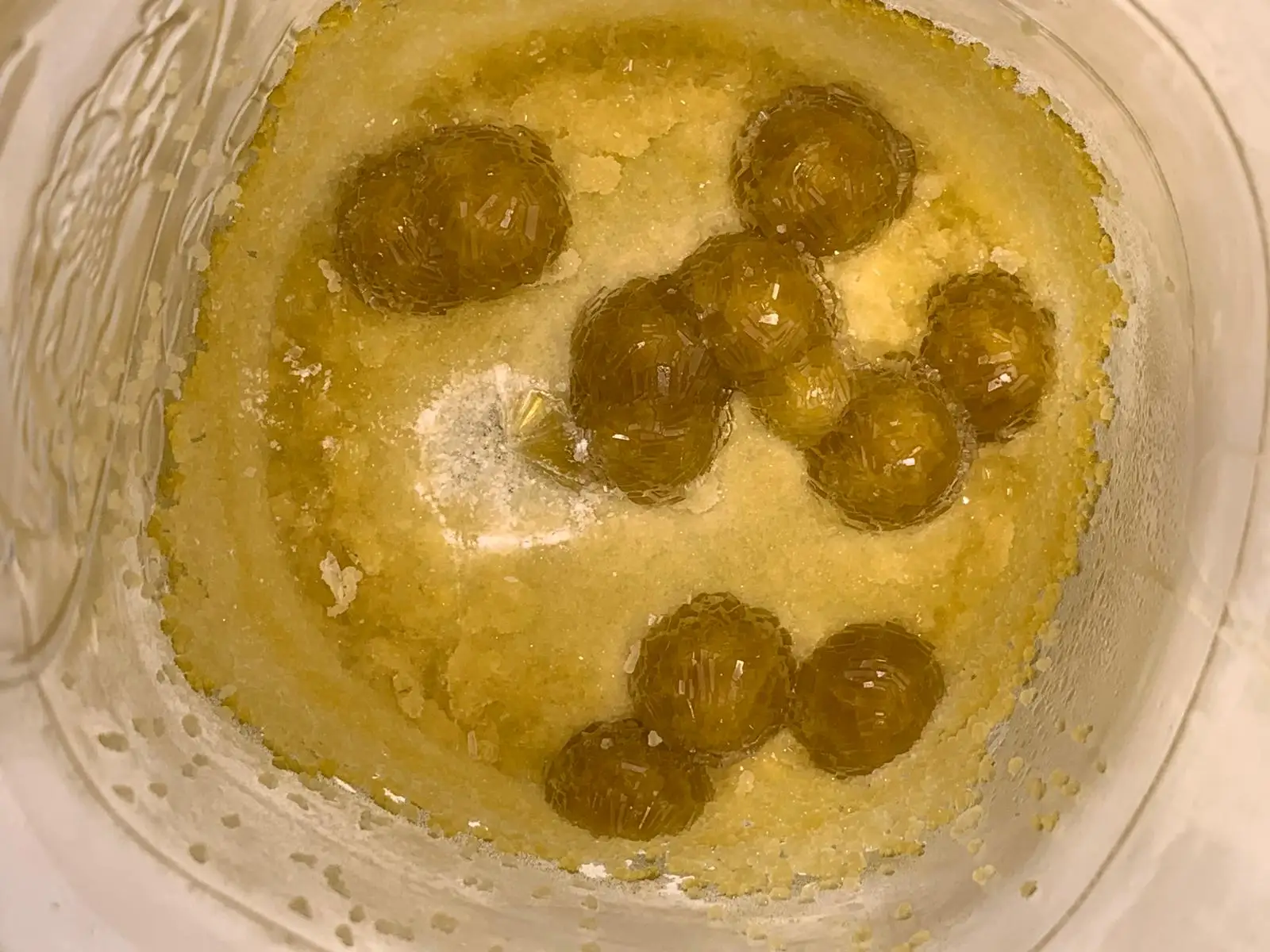
Own the land. Harvest the advantage.
We'd welcome the chance to walk you through the model line by line — or the property in person. A rare, entitled, sun-grown foothold in one of the country's most supply-starved cannabis markets doesn't stay available for long.
One email. You receive the access code to the documented data room and, for accredited investors, the terms letter. Prefer to talk first: (832) 244-9139
Lucky's Leafs LLC · Harmony Township, Warren County, NJ · Confidential
Illustrative projections based on documented assumptions and cited market data; not an offer to sell securities, and not a guarantee of results. Figures subject to due diligence, appraisal, and final licensing.